We’re improving our website: We’re making improvements to the look and navigation of our website to make it easier to find the information you need. You may notice some pages looking a little different while these updates are being made.
NWJCC's first national advanced therapies report highlights growing access to innovative treatments
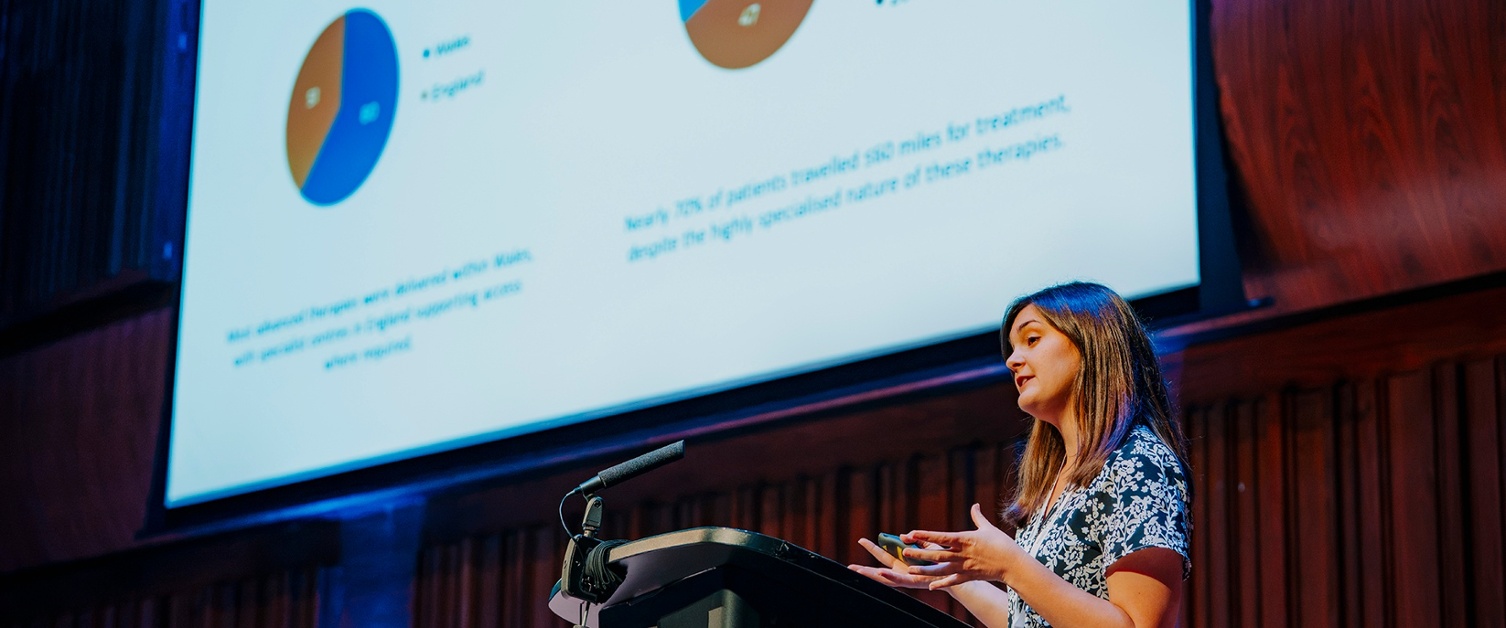
The NHS Wales Joint Commissioning Committee (NWJCC) has shared findings from its first national report on the availability, access, and use of advanced therapies, highlighting growing access to innovative treatments and supporting future improvements in patient care.
Recently, Hannah Crocker, who leads the NWJCC's Advanced Therapy Medicinal Products (ATMP) Outcomes Programme, presented the findings at the Advanced Therapies Wales Symposium 2026.
Advanced therapies are innovative treatments used to treat some serious and complex conditions, including certain cancers and rare genetic disorders. These treatments can provide new options for patients where traditional treatments are limited or may be less effective and, in some cases, have the potential to transform lives.
The NWJCC commissions all NICE-recommended advanced therapies on behalf of people in Wales. As these treatments continue to develop, it is important to understand how they are being used across Wales and the difference they make for patients, their families and the wider health system.
The NWJCC ATMP Outcomes Programme brings together information from across Wales to build a clearer picture of access to advanced therapies and the outcomes they achieve. This helps provide evidence to support future service planning and commissioning.
Advanced Therapies Wales (ATW) is a national programme that brings together NHS organisations, universities, researchers and industry partners to support the development and delivery of advanced therapies across Wales. The symposium, hosted by ATW, provides an opportunity for organisations to share learning, showcase innovation, and discuss future developments in the field, including work being led through the NWJCC's ATMP Outcomes Programme.
During the event, Hannah shared findings from the programme's Availability, Access and Utilisation Report, the first national report examining the availability, access, and use of advanced therapies in Wales. The report showed that access to advanced therapies has increased significantly since 2019, with patients from all seven Health Boards receiving treatment. Beyond the work highlighted at the symposium, progress is also being made to better understand the impact of advanced therapies on patients across Wales. This includes developing a national dataset to track outcomes and gathering feedback from patients about their experiences of care.
Looking ahead, the programme will continue to develop its understanding of how advanced therapies are accessed and experienced by patients across Wales. Over time, this will help identify trends, support service improvements, and ensure decisions about care are informed by evidence from Welsh patients and services.
Hannah said: "It was a great opportunity to share the progress we have made through the ATMP Outcomes Programme and learn from colleagues across the UK. By bringing together Welsh data, we can build a better understanding of how advanced therapies are being used, support future service planning, and help ensure patients continue to have equitable access to these innovative treatments. Ultimately, this work helps ensure that decisions affecting patient care are informed by a clearer understanding of the needs and experiences of patients in Wales.”
Hannah continued: “One of the highlights of the symposium was hearing directly from patients who had received, or were preparing to receive, advanced therapies. Their experiences provided a powerful reminder of why this work matters and the positive impact these treatments can have on people's lives.”
The event also recognised the contribution of colleague Ibukunoluwa Oginni-Falajiki, whose poster presentation exploring some of the practical challenges involved in collecting and validating healthcare data for real-world evidence projects, won second place.
By sharing learning, working collaboratively with partners and building a stronger understanding of how advanced therapies are used in Wales, the NWJCC is helping to improve equity of access to innovative treatments across Wales. As more evidence becomes available, it will support informed commissioning decisions and the continued development of high-quality services for patients.