First Patient in Wales Receives Transformative Gene Therapy for Haemophilia B
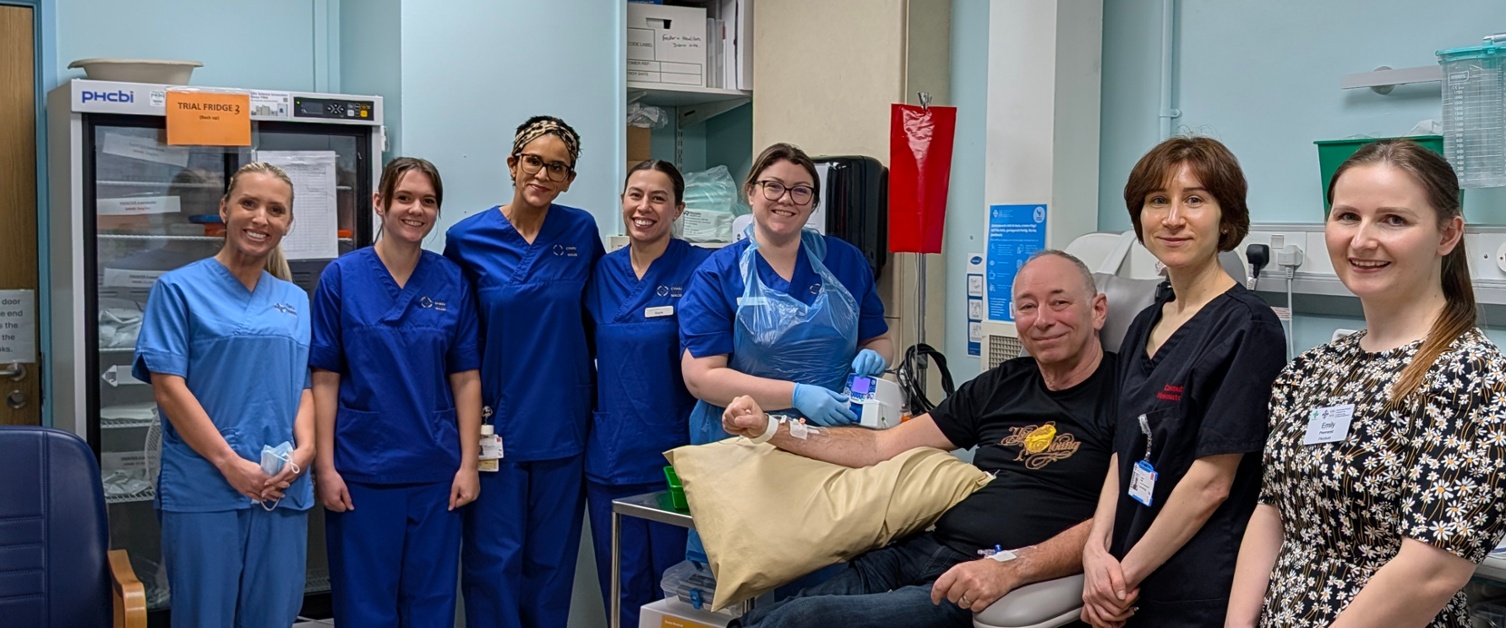
Photo credit: Cardiff and Vale University Health Board
On 13 January 2026, a patient became the first in Wales to receive an innovative gene therapy for haemophilia B, delivered in Cardiff. This treatment has the potential to transform care for this rare condition by replacing lifelong injections with a single infusion. Commissioned by the NHS Wales Joint Commissioning Committee (NWJCC), this milestone expands the advanced therapy options now available to patients across Wales. This development means people in Wales can access another cutting‑edge treatment closer to home.
Nigel, who was diagnosed with haemophilia at just eleven months old and is the first patient in Wales to receive the gene therapy, said:
“Having the opportunity to receive gene therapy is so extraordinary. This is pioneering treatment and being first is an honour, but also a responsibility. I am deeply aware that my experience will help inform what comes next for others in Wales and beyond.
“I have had a weekly injection to stop my bleeds for as long as I can remember but being the first person in Wales to receive gene therapy for haemophilia B has meant an end to that. This is not a cure in the traditional sense, but it means I don’t have to inject myself weekly anymore. Instead of repeatedly replacing the missing clotting factor, gene therapy gives my body the instructions it has always lacked — enabling it to produce factor IX itself
“Most of all, I feel proud — proud of how far treatment has come, proud of the clinicians and researchers who made this possible, and proud to stand at a moment where living with severe haemophilia B may finally begin to look very different.”
Haemophilia B is a rare, lifelong condition where the blood does not clot properly because of low levels of a protein called factor IX (FIX), making it harder to stop bleeding. In severe cases, bleeding can happen inside joints and muscles without injury, causing pain, stiffness and long-term joint damage. Haemophilia B is classified as a rare disease, affecting around 3.8 people per 100,000 [1].
Until now, treatment has involved regular injections to replace the missing clotting function. These injections help control bleeding but need to be repeated throughout life. The new therapy, called Hemgenix (etranacogene dezaparvovec), works differently, by administering a functional copy of the FIX gene into the body. This enables the liver to produce its own FIX and help the blood to clot more normally. The treatment is given as a single infusion, offering the potential for long-term protection and reducing the need for ongoing treatment, giving patients greater freedom in their daily lives.
Melanie Wilkey, Director of Commissioning for Specialised Services at NWJCC, said:
"Making this therapy available in Wales is a significant achievement. It shows how collaboration across the NHS can bring the most advanced treatments to patients who need them. By working together nationally and locally, we’ve ensured that people in Wales can access this innovative care close to home.
“Although only a small number of patients in Wales are eligible for this treatment, its impact could be life changing. By reducing or even eliminating the need for regular injections, it offers greater independence, improved long-term health outcomes, and a new level of confidence for patients managing this rare condition."
This milestone has been made possible through close collaboration with colleagues from Cardiff and Vale University Health Board, including the local haemophilia and pharmacy teams, as well as national partners such as NHS Wales Shared Services Partnership (NWSSP) Medicines Value Unit and Advanced Therapies Wales.
Treatment will be delivered at University Hospital Wales for patients in South Wales, while patients in North Wales will access care through an established pathway to Manchester via Liverpool, ensuring treatment is provided as close to home as possible. Eligible patients across Wales will now begin receiving therapy, beginning a transformative phase for the care of haemophilia B.